
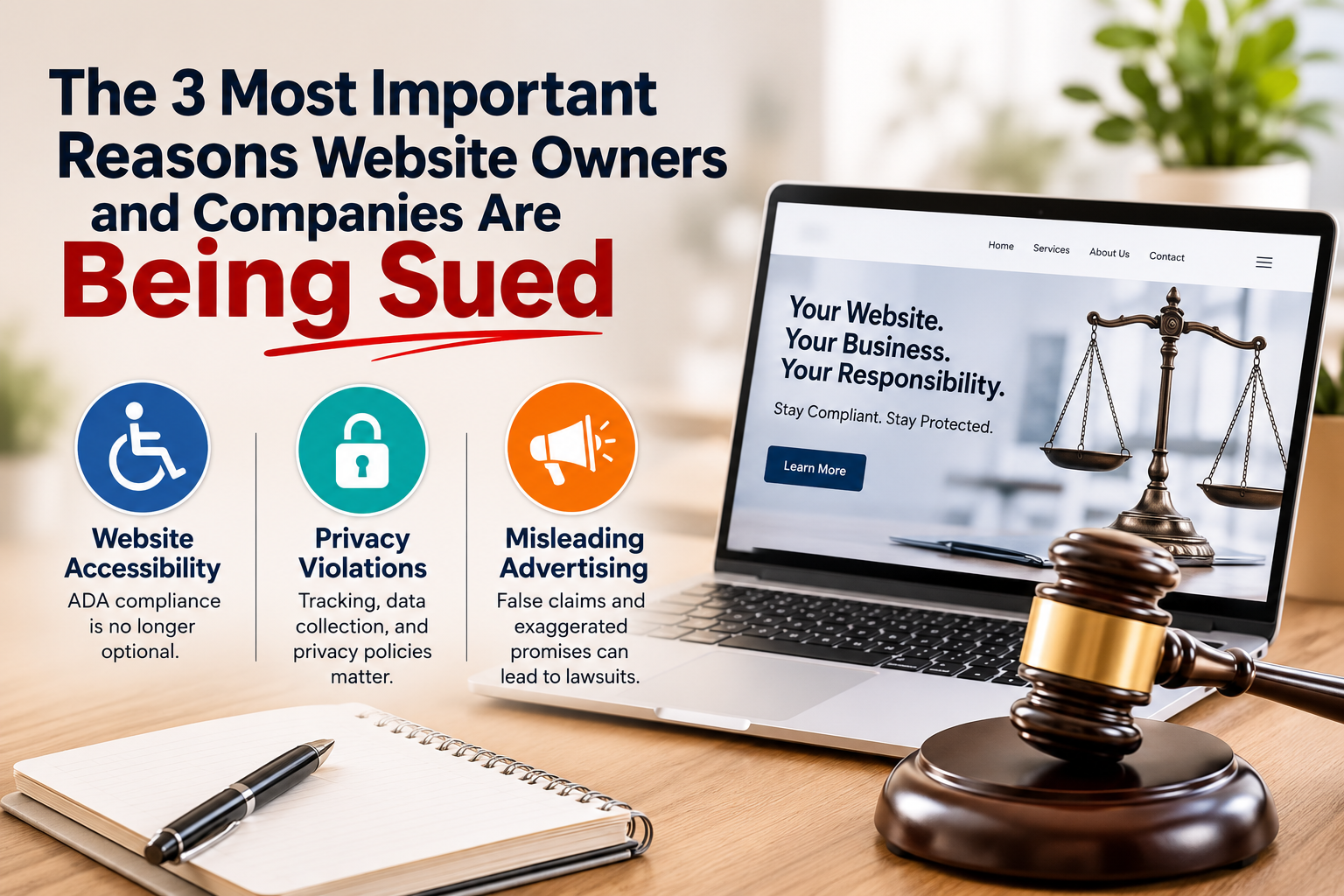
In today’s digital world, your website is often the first impression customers have of your business. While an attractive design and engaging content are important, legal compliance is just as critical. Every year, thousands of businesses face lawsuits because their websites fail to meet legal requirements. These lawsuits can result in costly settlements, attorney fees, and damage to a company’s reputation.
Here are the three most common reasons website owners and companies are being sued—and what you can do to reduce your risk.
1. Website Accessibility (ADA Compliance)
One of the fastest-growing sources of lawsuits is website accessibility. Under the Americans with Disabilities Act (ADA), businesses that serve the public are increasingly expected to make their websites accessible to individuals with disabilities.
A website may be considered inaccessible if users who rely on screen readers, keyboard navigation, or other assistive technologies cannot easily access its content.
Common Accessibility Issues
- Missing alternative (alt) text for images
- Poor color contrast that makes text difficult to read
- Videos without captions
- Forms that cannot be completed using a keyboard
- Buttons or links without descriptive labels
- Improper heading structure
Why It Matters
ADA lawsuits have become increasingly common, especially in states such as California, New York, and Florida. Even small businesses, medical practices, restaurants, retail stores, and professional offices have become targets.
How to Reduce Your Risk
- Conduct regular accessibility audits.
- Follow the Web Content Accessibility Guidelines (WCAG).
- Test your website using accessibility tools and assistive technologies.
- Correct identified issues promptly.
- Train your web developers to follow accessibility best practices.
2. Privacy Violations and Website Tracking
Many businesses use tools such as analytics software, advertising pixels, chat widgets, and session recording software to better understand visitor behavior. However, collecting visitor information without proper disclosure or consent has led to a growing number of lawsuits.
Businesses have faced claims related to:
- Tracking visitors without proper notice
- Recording user interactions
- Collecting personal information through online forms
- Sharing visitor data with third-party advertising platforms
- Inadequate privacy disclosures
Common Risk Areas
- Missing or outdated Privacy Policy
- No Cookie Policy or consent banner
- Contact forms without privacy disclosures
- Appointment booking systems collecting sensitive information
- Marketing pixels installed without proper notice
How to Reduce Your Risk
- Maintain an up-to-date Privacy Policy.
- Use a cookie consent banner when required.
- Review all third-party tracking technologies.
- Limit data collection to what is necessary.
- Work with legal counsel to ensure compliance with applicable privacy laws.
3. Misleading Advertising and False Claims
Marketing language is designed to attract customers, but exaggerated or unsupported claims can create legal problems.
Businesses may be sued if they advertise services or products using claims that cannot be substantiated.
Examples
- “Guaranteed results”
- “Permanent solution”
- “100% safe”
- “No side effects”
- “Works for everyone”
- Misleading before-and-after photographs
- Hidden fees or unclear promotional terms
Industries such as healthcare, medical spas, cosmetic practices, weight loss clinics, and wellness providers are especially vulnerable because advertising often involves claims about health or appearance.
How to Reduce Your Risk
- Ensure all advertising claims are truthful and supported by evidence.
- Clearly disclose limitations and typical results.
- Explain promotional terms and conditions.
- Avoid guarantees unless they can legally be honored.
- Regularly review website content for accuracy.
Additional Areas of Risk
Although the three issues above account for many website-related lawsuits, businesses should also pay attention to:
- Copyright infringement (using images or content without permission)
- Improper use of trademarks
- Incomplete Terms and Conditions
- Failure to comply with consumer protection laws
- Data security and cybersecurity vulnerabilities
Protecting Your Business
Your website should not only attract customers—it should also help protect your business from unnecessary legal exposure.
A proactive legal and technical review can identify potential problems before they become expensive lawsuits. Regular website audits, updated legal policies, accessibility testing, and accurate marketing content are all essential components of website compliance.
No website can be guaranteed to be lawsuit-proof, but addressing accessibility, privacy, and advertising compliance significantly reduces your legal risk and demonstrates your commitment to serving customers responsibly.
Final Thoughts
As regulations evolve and digital litigation becomes more common, businesses can no longer view website compliance as optional. Investing in accessibility, transparent privacy practices, and honest marketing is not only good legal practice—it also builds trust with your customers.
Taking these steps today can help protect your business, strengthen your online reputation, and create a better experience for every visitor who comes to your website.
Disclaimer: This article is provided for informational purposes only and should not be considered legal advice. Laws and regulations vary by jurisdiction and change over time. Businesses should consult with a qualified attorney regarding their specific legal obligations and compliance requirements.


Comments are closed